
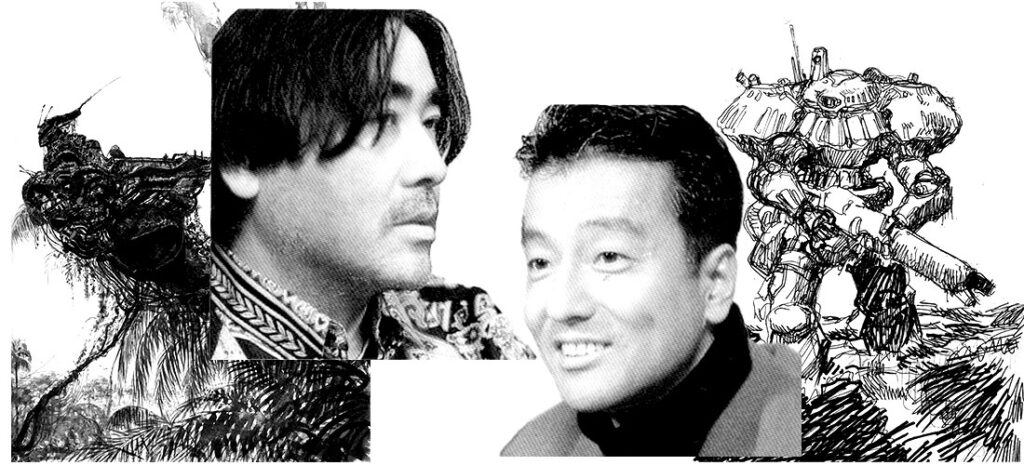
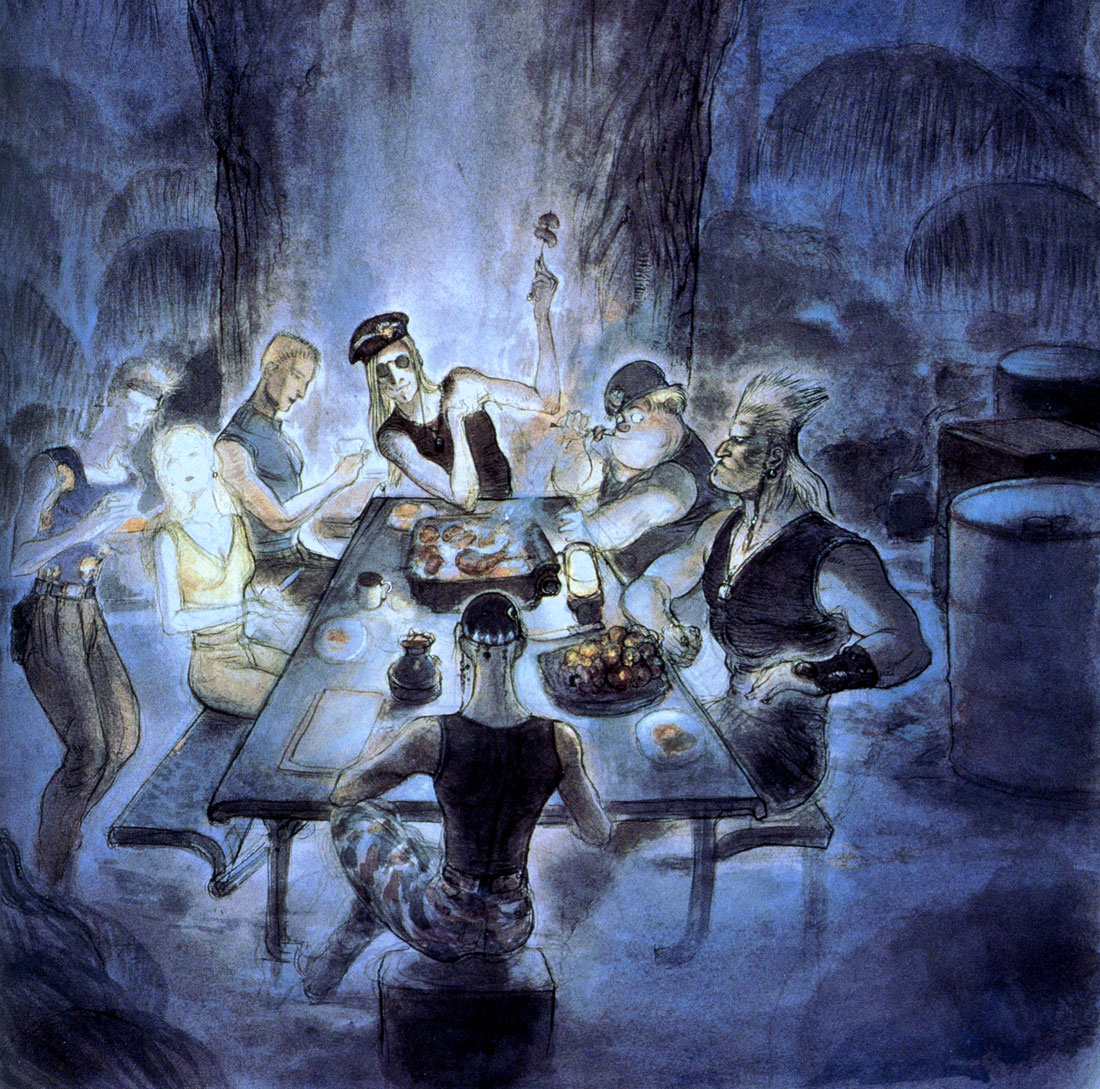
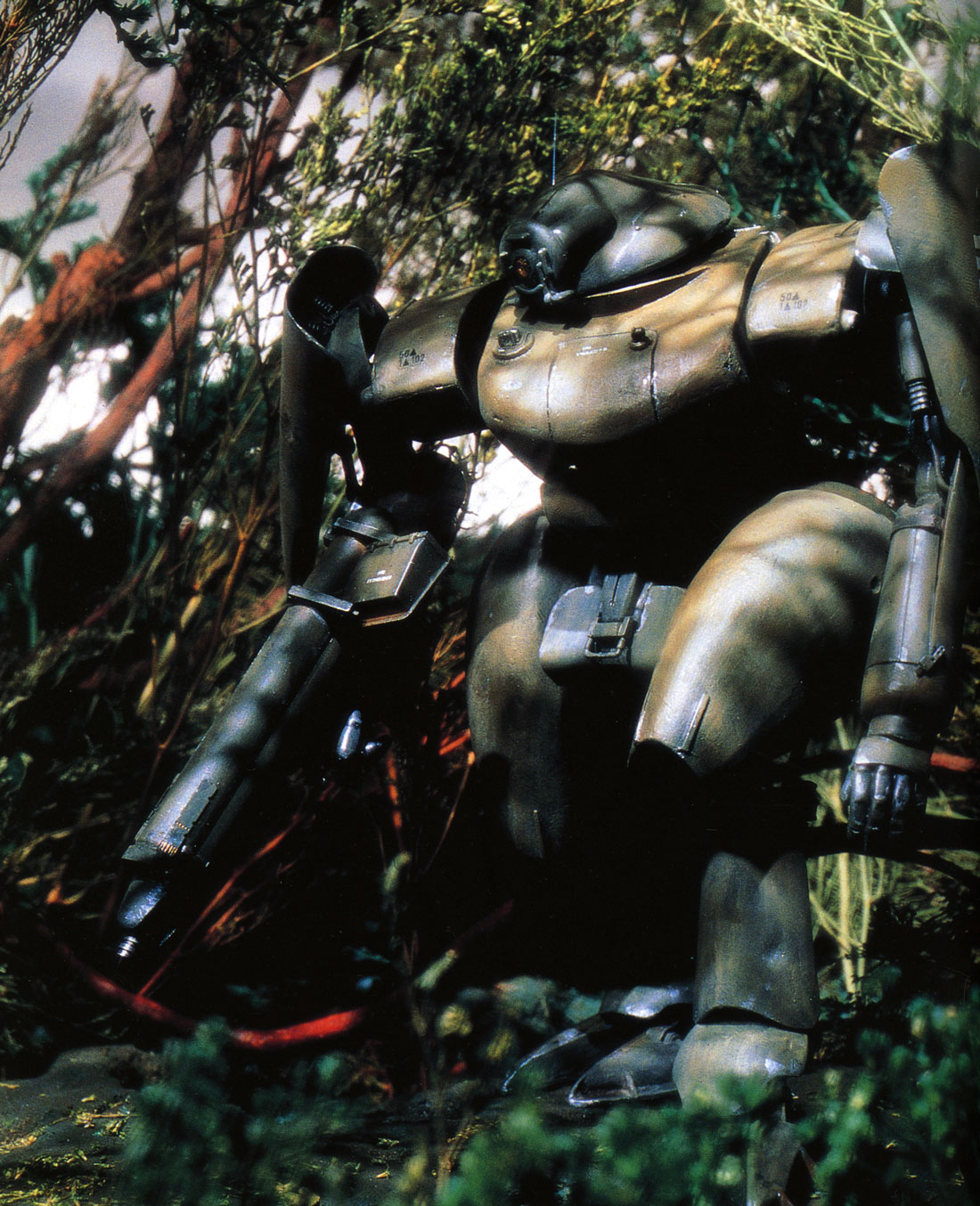
Released for the Super Famicom in 1995, Squaresoft’s Front Mission brought contemporary mecha action to home consoles as a turn-based strategy game. Featuring character designs by Yoshitaka Amano [Final Fantasy, Mospeada] the game also credited Kow Yokoyama with “3D Up;” not designing the mecha themselves but creating three-dimensional dioramas of them.
The work by these two artists was featured in the book Front Mission in Huffman, split between Amano’s character-focused paintings and illustrations and Yokoyama’s scratch built models and dioramas.
The podcast Giant Robot FM recently covered the landmark mecha strategy game in their latest print ‘zine (which, coincidentally, features a cover and logo by me) and included a translation of an interview with Amano and Yokoyama. They were kind enough to offer the text of the interview to me to publish here and you can find it below. When I was in the earliest stages of Zimmerit and making a lists of interviews to have translated and articles to write, this one was near the top but it never happened. Funny how things work out!
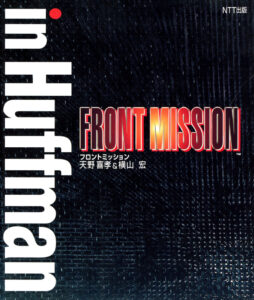 Front Mission in Huffman
Published 1995
Translated by Mr. & Mrs. Sadmilk
Fantasy illustrator Yoshitaka Amano.
Kow Yokoyama, who displays incredible talent in diorama making.
On the brutal battlefield of Huffman Island,
These two powerful personalities have a fateful reunion.
For these two longtime acquaintances,
How did they perceive each other’s work?
The much anticipated Talk Battle begins!
“I wondered if this person would be able to make a living.”
I understand you two have known each other for a long time. What were the
circumstances of your first meeting?
Yokoyama: I went to a certain (unnamed?) publishing house1 to submit a manuscript.
Amano: Right, right. We had finally started working together, but it was back when it was still very, very difficult to make a living.
Yokoyama: Our deadlines were the same, so we went to turn in our manuscripts on the same day. We met for the first time in the editorial department.
Amano: Yes, and I was worried, thinking, “Can this guy really make a living with this?” [laughing]
Yokoyama: [laughing] Right?
Amano: Around this time, I had been working on animation, and that was my main job, the main source of my income. And while I know it was none of my business, I was just concerned about other people.
Yokoyama: You were worried about me [laughing]! But truth be told, the fee I got for a manuscript was exactly the same amount as my haircut. I thought, if I went to the barber, everything I drew that month would be gone [laughing].
Amano: Well then, little by little, Yokoyama-san’s name and work started popping up. When I asked people about you, people would say, “That guy is famous!” And I’d go, “Eeeeeh!?”, something like that. Then I felt relieved, thinking, “Ah, he’s doing alright.” I was in my late twenties at the time.
Yokoyama: I failed to land a job the year after graduation. But I guess we both felt like things would work out somehow, right?
Amano: Right, and I think there were a lot of others too (like us). Among them, the ones who stuck around… well, it sounds weird to say it like that, but I think it’s amazing that they’re still working hard now. Back then, I didn’t really know much about Yokoyama-san’s 3D work. It wasn’t until later, I found out about it and thought, “Ah, that’s great [laughing]. He’s been doing all kinds of things.”
It was kind of like a senior/junior relationship, too, right?
Yokoyama: That’s right, exactly.
Amano: Not exactly, we are different ages, but our debuts are probably around the same time.
Yokoyama: That’s right, in terms of publishing illustrations in SF (science fiction) under our own personal names. Though in Amano-san’s case, he was already working professionally. In that way, he was already a huge senior to me. I was just messing around, you know [laughing].
Amano: When I was about 22 or 23, I felt like I shouldn’t just be doing what I was doing, so I drew a bunch of stuff and took it to publishers. That’s what it was like back then.
Yokoyama: It’s funny to think we were scheming the same thing and buzzing around the same area at the same time.
“I’d like for him to try using Japanese painting techniques.”
Is this the first time you’ve worked on the same project together?
Yokoyama: It was after we both drew illustrations for that magazine, wasn’t it?
Did you consciously approach anything differently, knowing this was a joint effort?
Yokoyama: Oh, I thought, “This is great.” That’s because I play games quite a bit. And Amano-san has been involved with Final Fantasy for so long, right? I always thought, “I wonder if Amano-san’s characters will ever show up and talk?”2 Now, it seems they actually will, so it sounds interesting. This is just me speaking as a gamer. [laughing]
Amano: In my case, even before I started, I heard talk about the work being realized in 3D. I thought, “Ah, is it Yokoyama-san? Oh, OH, finally!” [laughing] But for me, the world of Front Mission is a bit unique. It’s not fantasy. So, I approached it less as an illustrator or painter and more with the feeling I had back when I was doing character design and animation.
So, it was a little different from your usual world.
Amano: That was actually what made it interesting.
Yokoyama-san, this is not unusual for you, is it?
Yokoyama: Because I love robots right? [laughing] I studied Japanese painting in college. But for some reason, even then, I liked robots, machines, and that kind of oily stuff. Just now, seeing Amano’s original artwork displayed, I thought, “Amano-san’s style looks more like Japanese painting.”
Amano: I don’t have any formal knowledge, so I just do it my own way. But now that you mention it, the colors might be reminiscent of Japanese painting.
Yokoyama: There are many Japanese painting techniques I’d like Amano-san to try. They’re simple. When I was a student, I only did unconventional things. Japanese painting involves a technique like painting a wall, and you can achieve the same effect with modern materials. So, I hope he feels free to use it more. I personally think that the way Amano-san creates space is very Japanese-painting-like.
Amano: I don’t really know, but maybe that kind of sensibility is just innate to Japanese people.
Yokoyama: Yes, maybe the soul of Sharaku3 is somewhere in there.
It’s surprising that Yokoyama-san originally studied Japanese painting.
Yokoyama: Hey, you’ve got it all wrong [laughing]. I was famous for being a bad student. But the texture of Japanese painting looked interesting to me.
Amano: Ah, there’s a connection there, isn’t there?
Yokoyama: At 19, you’re deciding your path in life. At that age, your brain isn’t at its
sharpest, so you can’t really make any proper decisions about your future. That’s why we learn techniques and such at school, and I thought, if we’re going to do that, it might as well be something interesting.
“I might master lithography at a workshop in France.”
Please tell us about your future aspirations.
Yokoyama: I’d like to get involved in this kind of work (game development) from the very start, starting with the design. It might end in failure [laughing]. But that’s okay too, right? [laughing]. I’d like to start from the very beginning, tightening screws. I really like that nuance of tightening screws and applying oil.
As an enthusiast would, right? What about you, Amano-san? What about
lithography?
Amano: Ah, lithography? I’m quite comfortable with it now [laughs]. I’m going to France next, to a workshop. I’m thinking of mastering lithography there.
Yokoyama: That’s admirable, I respect that.
Amano: For example, there are rooms where Miró4 worked, literally. Various famous painters from all over the world come… It’s amazing that you can work there. I really want to try that.
Yokoyama: You know, for someone like me, going to Florence was just about eating pizza and having fun.
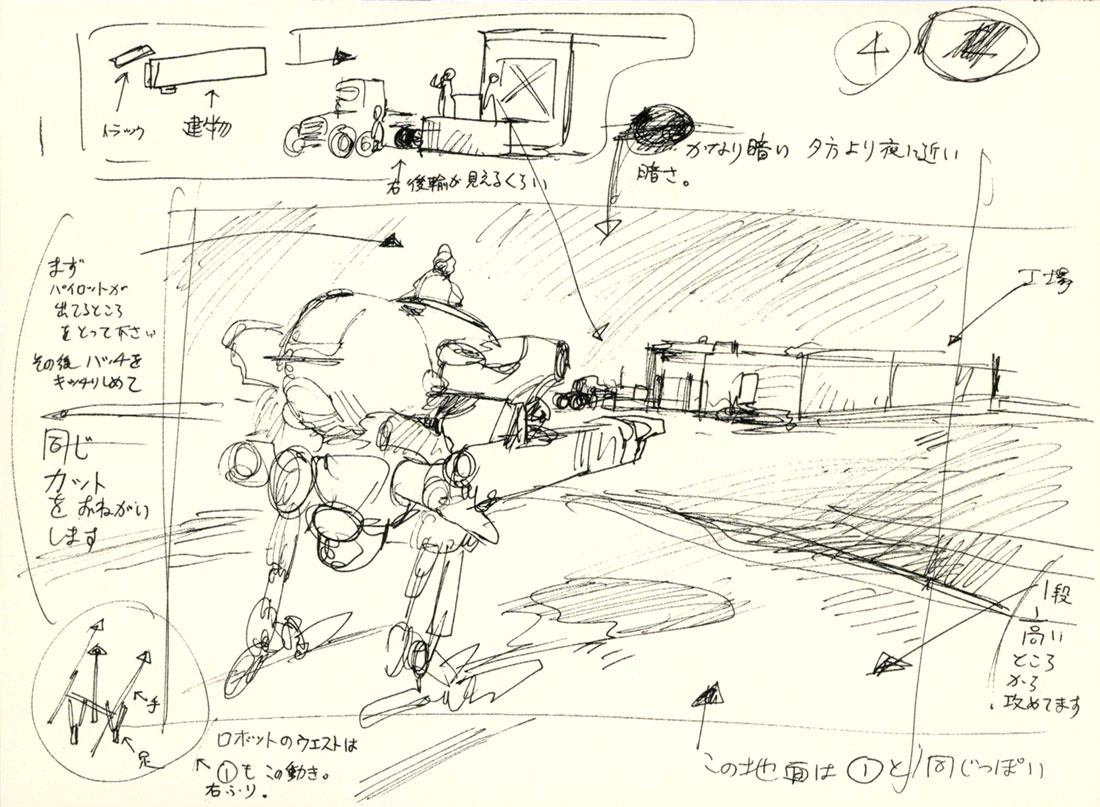
“I thought it was similar to creating a stage set for a play.”
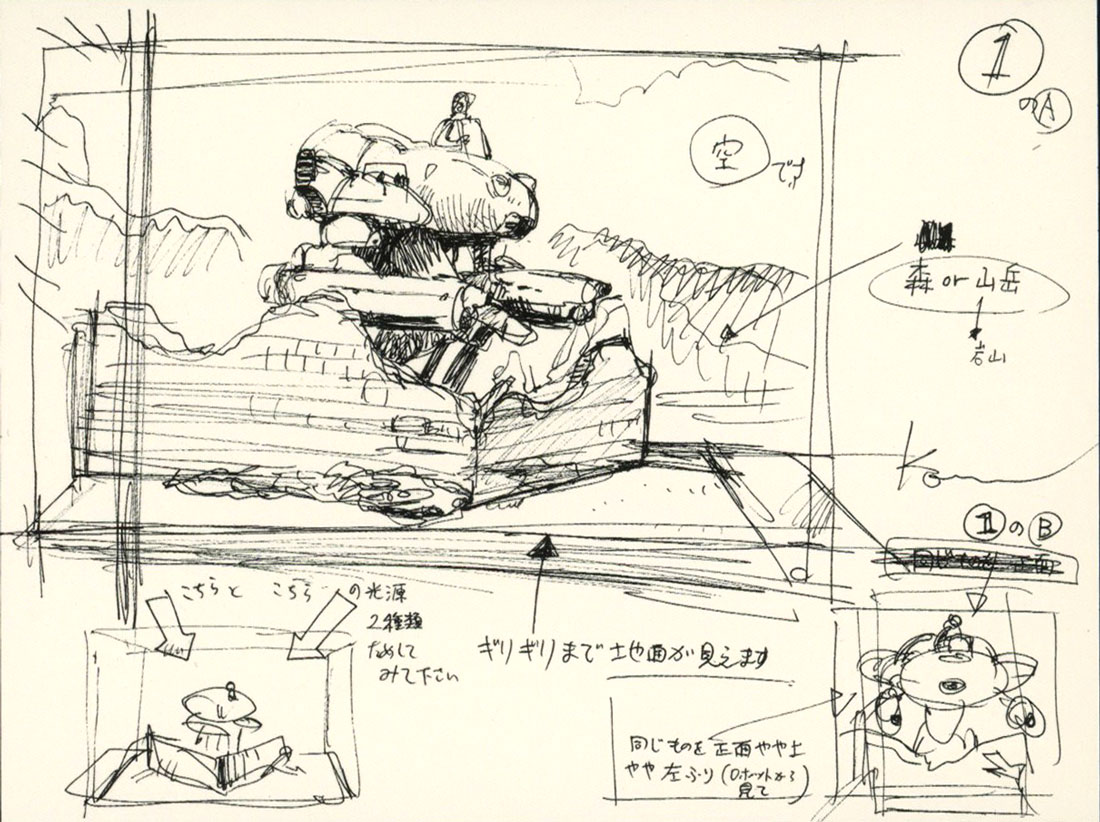
Yokoyama: [Showing photos of his work] You see, the photographer’s skill is huge here. When I draw the storyboards, he shoots exactly as I imagined. No, it’s even better than that. That hazy feel, for instance. His name is Takase-san. He’s the one who shoots everything I create, including book covers.
Is he a specialist in photographing 3D objects like this?
Yokoyama: Yes, exactly! He takes photos that make the models look like the real thing.
I was surprised to hear that the background clouds were cotton, though.
Yokoyama: That’s also thanks to Takase-san’s skill.
Amano: To make something this size look real, it really comes down to photography, doesn’t it? This color scheme—it’s all about the lighting, right?
Yokoyama: Well, first I apply this color.
Amano: To the area around it?
Yokoyama: Right, right.
Amano: So, in the end, no matter what color you paint, if you shine a red light on it, it turns red. So, it’s like drawing the picture starting with the lighting.
Yokoyama: That’s right, that’s right. So even when we’re first creating it, we draw the storyboards together, and we draw everything—like the shadows here should be like this.
Amano: Do your storyboards usually show just one pose?
Yokoyama: No, various ones. Because I want many different shots taken from one finished piece. I draw for each of them [pointing at a storyboard]. These doodle-like sketches.
The instructions are interesting. Like,”Just make it smoky” [laughing].
Amano: Does he actually perform that kind of direction on set?
Yokoyama: No, I leave it entirely up to him. We’ve been working together for years.
Amano: That takes some serious rapport.
Yokoyama: We’ve been working together for about 10 years. This is the front-angle shot of the photo we just saw. If I write, “Also take some shots with a different angle,” the best side angle will come out. It’s a bit like making a movie set.
Amano: It’s similar to a stage, isn’t it? With the lighting and everything.
Yokoyama: When I was a student, I helped with the art for Shūji Terayama’s stage productions.
Amano: Yeah, you did.
Yokoyama: Doing that kind of work, I thought it was similar to creating a stage.
Amano: I also did art.
Yokoyama: You were also involved in theater, right?
Amano: Yes. Even then, the direction was determined by the lighting. Lighting is like painting a picture with red, blue, and yellow light—adding color. So, I thought,
“Ah, this is the same as painting a picture.” No matter how well you prepare, it’s meaningless without the lighting. I felt that when I saw your work.
Amano’s Manager: At first, I complained, “But there’s no color!” [laughing]. I asked for shades and tones. Then he said, “No, this is fine because we’ll do it with lighting.”
Yokoyama: I see.
Manager: It was me who said that, though. [laughing]
Amano: This is so cool, ain’t it?
Yokoyama: You would probably be surprised if you saw the real thing. It’s only about this big.
Amano: Oh, it’s that small?
Yokoyama: To make it look big, I thought it was better to make it small so that the perspective could be utilized effectively. If you make it large, the camera can’t pull back far enough, right?
Amano: Yokoyama-san, you don’t even follow the instructions when making plastic models, do you?
Yokoyama: That’s right. I’m a bit cheap at heart, so ever since I was a child, when a plastic model broke, I would use the parts to create something else.
Is that where it all started?!
Yokoyama: Yes. And I would just change things on my own, saying,
“I think it would be better like this.” I’ve been doing that since I was young.
“The viewer will feel the artist’s energy.”
I imagine many readers are fans of Amano-san and Yokoyama-san, and perhaps some
are watching and thinking they’d like to pursue this kind of work in the future. Do you
have any advice for them?
Amano: Hmm… how about that? [laughing] Once it becomes a job…(ominous joking I suppose) But if you can keep doing what you love your whole life, that’s the best, isn’t it? In that sense, I haven’t changed since I was a kid. It’s the same thing. Putting paper on the desk and drawing without paying attention to anything else—that’s how I was as a child, and I still do it now. And I’ll probably be doing it when I’m an old man, too. And I think that makes me happy. So, for people who love that kind of thing, there are probably various ways to go about it, but I really think continuing to do it forever is what makes life truly happy, so I hope they keep at it. If they love it, that is.
And how about you, Yokoyama-san?
Yokoyama: Absolutely, absolutely right. They say if you don’t get bored with something, it translates to business, right? In business, there’s definitely that aspect where you just have to keep going, isn’t there? So basically, if someone is trying to pursue that kind of career, what advice can I give? Maybe how to get by without sleeping much [laughing]. That kind of thing is actually pretty important. It might be better to build up your stamina than to study [laughing]. I really do think that. When I was small, I was a bit frail, so I preferred drawing over playing outside. Then, at some point, I suddenly became quite energetic and started exercising all the time. So, thanks to that, I can really focus intensely when I need to, and also, creating 3D objects actually requires some good strength. Your fingers will get sliced by knives, but you know. Maybe it’s good to build up your grip strength and things like that.
Amano: Ah, that might be true.
Physical strength?
Amano: In terms of energy, too. Isn’t that true of art? Yokoyama-san’s work has his energy, and mine has mine, and the viewers seem to feel that energy,you know? And I don’t think works created in a casual, fluffy manner will move people. I believe it needs this intense, concentrated energy. More than technique or anything else, that is what I feel is important. I think the reason people appreciate a good piece of art is because they feel that energy too.
Translator’s Note
This interview between the two is quite conversational, at times a bit hard to decipher what they are looking at while speaking, presumably the pictures that surround the interview on those same pages or maybe various art pieces found throughout the book. It almost felt like it was a filmed interview and transcribed to text in the making of this book, regardless, it still has some nice insightful conversations as to their meeting and the way they think about their works respectively.
Mr. and Mrs. Sadmilk
Notes
- We tried to do a little research here and it seems it is this: Yoshitaka Amano and Kow Yokoyama both had work published in Japan by Hayakawa Shobo (ハヤカワ文庫), primarily in the Hayakawa Bunko SF line. This Japanese publisher has featured artwork from both artists for science fiction-related works, though typically on
separate projects. Yokoyama was the cover illustrator for a 1989 Hayakawa Bunko edition Schismatrix by Bruce Sterling. Amano was the illustrator for short stories also by Bruce Sterling, such as “Swarm” and “Spider Rose,” published in S-F Magazine. - This may be in reference to how Final Fantasy games utilize Amano’s art for covers but not in-game as sprites per se, as Front Mission does.
- Famous Japanese ukiyo-e painter.
- I believe they are referencing an old sculptor and painter named Joan Miró i Ferrà.